
If you have ever tasted something so good that you just stopped talking for a second — that is exactly what Multani Sohan Halwa does to people. This traditional, popular sweet comes from Multan, an old and beautiful city in the Punjab province of Pakistan. It is not just a dessert. People there treat it like a piece of their history — something they are really proud of.
The word Sohan comes from the Persian word for something pleasing and delightful. And honestly? That name fits perfectly. One bite of this traditional sweet dish and anyone can understand why it has been around for so long. The delightful taste, the richness, and that one-of-a-kind unique texture make it one of the most beloved and iconic desserts in all of Pakistani cuisine.
What Makes Multani Sohan Halwa So Distinct?
Most sweets are soft or sticky. Multani Sohan Halwa is different. It has a dense, chewy feel with a glassy texture that makes a clean snap when you break it. Then it slowly yields to chew in the most satisfying way. People call this a chewy-brittle texture — and it is unlike anything else in South Asian sweets.
It is not like the grainy tahini halva you might find in the Middle East, and it is nothing like the soft semolina desserts that are common in other parts of Asia. Multani Sohan Halwa comes as a solid, circular disc, generously studded with premium nuts on top. The buttery richness from desi ghee makes every bite feel special — but it never feels greasy or too heavy.
The gentle smell of cardamom, saffron, and kewra makes the aromatics linger in the best way — never overwhelming, always just right. That is the hallmark of Multani craft — a perfect balance between caramelized sweetness and savory sweetness. It works great as a tea-time sweet or an after-meal dessert.
The Art Behind Every Handcrafted Piece
Here is something that might surprise people: making Multani Sohan Halwa takes hours. It needs real patience, skill, and attention to detail. The preparation is not something anyone can rush.
Traditional families who have been making this artisan sweet for generations know this better than anyone. Families like the team behind hafiz abdul wadood sohan halwa have spent years learning the exact proportions and precise timing needed to make every batch perfect. They guard their authentic recipe closely because it took so long to get it right.
In traditional kitchens, the halwa mixture is stirred in big copper cauldrons using wide paddles. Then it gets poured into trays and topped with roasted almonds and roasted pistachios that stud the surface. The final piece looks as amazing as it tastes — truly mouthwatering.
Ingredients at the Heart of This Traditional Recipe
The rich ingredients used in authentic Multani Sohan Halwa are what give it that deep rich flavor and creamy texture that people all across Pakistan love so much.
- Sprouted Wheat flour (Angoori / Samnak) — the most important ingredient; it creates the unique texture and cannot be skipped
- Plain flour (maida) — mixed with sprouted wheat to keep a smooth consistency
- Whole milk — added slowly while whisking to avoid lumps and build creaminess
- Citric Acid / tartaric acid / lemon juice — causes the milk to curdle just the right amount
- Alum (fatakdi) — a classic, traditional addition to the halwa mixture
- Glucose syrup — super important for the desired stringy texture and sugary strings; without it, the halwa goes hard
- Granulated Sugar — gives the caramelized sweetness and thick consistency
- Ghee — the heart of the recipe, giving that warm buttery richness
- Walnuts, cashews, almonds, pistachios — premium nuts used for filling and nut garnish on top
- Brown food colour and water — help with looks and getting the right even texture
Instructions: The Journey from Whole Wheat to Classic Dessert
Prepare The Sprouted Wheat
First, put whole wheat kernels into a bowl or container. Add enough water to fully submerge and cover them. Let them soak for 24 to 36 hours so the wheat kernels soften up. After soaking, drain the water and transfer the wheat to a dry bowl. Cover it with a wet towel to create a moist environment that helps with sprouting. Wait 2-3 days, keeping everything damp, until a small sprout appears from each kernel. After that, spread them out on a tray to start drying. The drying time changes based on weather conditions, so pay close attention until they are completely dried before grinding.
Note: Sprouted wheat might be available at some stores already prepared. But if not, the steps above work great. Just make sure to give it the specified time of 24 to 36 hours to allow it to sprout properly. When mixing everything together, use a wire whisk and keep gradually adding and mixing the milk with the flours for a smooth, lump-free consistency.
Prepare The Halwa
Grab a heavy-bottomed pan and combine the sprouted wheat flour with plain flour. Then gradually add whole milk little by little, using a wire whisk to keep things smooth with no lumps. Bring it to a boil while stirring occasionally to prevent sticking. In a separate glass, fully dissolve the sugar in warm water before pouring it into the milk mixture.
Turn the heat up to medium-high flame and slowly add the citric acid or lemon juice, gently stirring the whole time. This step makes the milk curdle a little — that is totally normal. Stop adding as soon as the right amount of curdling happens. Now add the brown food color, glucose syrup, and rest of the sugar. As water evaporates, stir continuously — this is the most crucial step in the whole cooking process. Use a wooden spoon or rubber spoon and keep the flame on low medium for 45 minutes to 1 hour. The halwa will slowly thicken, turn golden, and start to leave the sides of the pan. When strings of sugar begin to pull away cleanly, the right consistency has been reached.
Let it cool for 20 minutes, then mix in the dry fruits and additional ghee. Do not add walnut while it is still too hot — the heat can make them turn bitter or change colour. Pour everything into a mold using layering, then let it cool down completely. The recommended time is 6-7 hours so the halwa can fully set and hold its shape. Once ready, slice into desired portions and serve this amazing, delicious traditional sweet treat.
Where to Find Authentic Multani Sohan Halwa
Multani Sohan Halwa is famous both locally in Multan and across Pakistan. Because it is made with clarified butter and kept at room temperature with low moisture, it travels really well — making it ideal for travel and gifting to family and guests at Eid, weddings, and special visits.
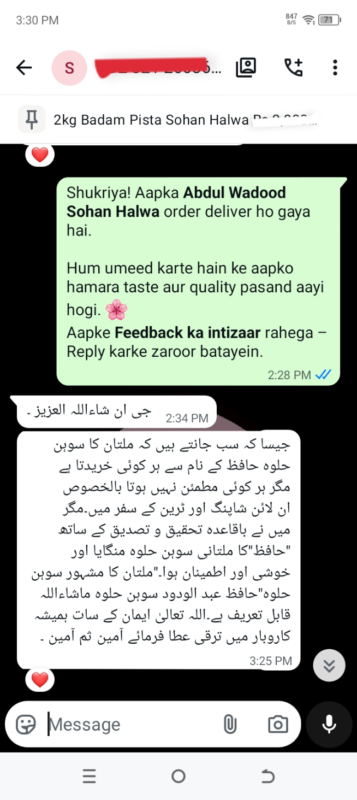
Hafiz Wadood Halwa (hafizwadoodhalwa.com) is a famous brand that makes this handcrafted sweet the old-fashioned, honest way. Abdul wadood sohan halwa is a name that stands for quality and trust — a historic brand rooted deeply in the heart of Multan. Hafiz abdul wadood sohan halwa multan offers several varieties, each one a true example of premium sweet making at its finest:
The texture can vary by maker — some make firmer, toffee-like slabs, while others make softer, layered pieces. But the best quality markers are always the same: clarity, sheen, and evenly distributed nuts across every piece. Hafiz abdul wadood multani sohan halwa checks all of those boxes every single time.
Frequently Asked Questions
Can someone skip sprouted wheat in this recipe?
No — sprouted wheat is the crucial base ingredient of the whole recipe. It is essential for getting that unique texture that makes traditional Multani Sohan Halwa what it is. There is simply no real substitute.
Is it possible to skip glucose syrup?
Skipping glucose syrup means the halwa will not get that desired stringy texture. Instead, it turns out hard and loses what makes it special. So it is a must-have in any authentic recipe.
Can someone use different nuts?
Yes! While walnuts are commonly used in the traditional version, other nuts like cashews and almonds give a complementary flavor that works really well. Check out Amazon favourites for good premium nuts that go great with this sweet delicacy.
There is something truly wonderful about a sweet that has been loved for hundreds of years. Multani Sohan Halwa started in the copper cauldrons of Multan’s traditional kitchens and has traveled all the way into homes across Pakistan and around the world. Its enduring appeal comes from more than just great taste — it comes from the patience, artisan craftsmanship, and culinary tradition poured into every single piece. Simple pantry staples, heat, and care turn into something truly luminous and celebratory. That is the magic of Multani Sohan Halwa — and it never gets old.